

Technical advances have a dramatic impact on our every day lives. Technologies once considered something beyond imagination, are now becoming commonplace, for instance, mobile telephones, Internet technologies, cloning experiments, and so forth. One such technological advance is the recent discovery of revitalization. Rather than just changing man’s view on repair in the conventional sense of the word, it opens new resources in operating machines and mechanisms.
At present, XADO is making active and sweeping inroads into different areas of science, technology and production and while technologies are emanating from laboratories around the world for new industries, power engineering and transport, we invite you to jointly explore how the XADO revitalizant can dramatically change your life.
You, our potential customers, no doubt have questions you need answering. This Frequently Asked Questions Section, FAQ for short, will answer the most typical and most frequently asked questions, which we received our over the past years. Conventionally, they fall into three categories: Vehicles, Industry and Firearms. We will also explain the physics of the process and demonstrate it graphically. Once you understand how XADO works, we hope you will be excited to try XADO for yourself.
To view the Frequently Asked Questions (FAQ's) in detail click on the links below:
- 1. What is Revitalization and how does it occur?
- 2. How does the created CERMET surface grow?
- 3. What is the thickness of the metal-ceramic coating formed as a result of revitalization?
- 4. Is there a risk of an excessive growth of the metal-ceramic layer? Can it cause the engine to seize up?
- 5. A superhard coating is formed as a result of the revitalizant’s application. Can the engine be rebored, if necessary?
- 6. What if the metal-ceramic layer peels off in operation?
- 7. Has Xado been tested by a world recognised testing authority?
- 8. I’ve heard that aftermarket additives are clogging up filters...
- 9. I am going to apply revitalizant to my new car, but it is under the warranty…
- 10. What is implied under the protection guarantee for 100,000 km (62,000 miles) of run?
- 11. There is nothing wrong with my Car, but would XADO still help?
- 12. I have a new Vehicle. Why do I need XADO?
- 13. If you are about to embark on a major engine overhaul, you’re just in time!
- 14. How often will the engine need to be treated?
- 15. When is it best to start the application of the revitalizant?
- 16. What happens to the honing and cylinder cross hatch?
- 17. Can I drive without oil if I use revitalizant?
- 18. How long does the revitalizant’s effect last?
- 19. What kind of oil is the best for treatment: old or new, synthetic or mineral?
- 20. I am the second owner; I have no idea what kind of oil was used in the engine. Can I use XADO products?
- 21. Won’t the additive settle in the bottom of the oil pan and lose its efficiency if the car is not used for a long period of time?
- 22. When my car is idling, the oil pressure light blinks. Will XADO help?
- 23. Will the revitalizant help in case of increased oil consumption?
- 24. How does Xado help to save fuel?
- 25. Will XADO stop my engine smoking. Will the revitalizant help?
- 26. I own an old car and the engine sounds a little noisy?
- 27. My vehicle has just failed it's MOT due to high exhaust emissions, will the revitalizant help?
- 28. I'm interested in improving the compression in my engine. Will one blister pack of the 3 part treatment be sufficient to improve compression?
- 29. How will I feel the effect of the revitalizant on my car?
- 30. Will revitalization help any engine?
- 31. When is it recommended to use the revitalizant for cylinders? Is there a revitalizant to treat the whole engine?
- 32. Why does the compression in the cylinders increase?
- 33. Should the treatment of the diesel engine and fuel outfits be done separately or simultaneously?
- 34. Will XADO affect the Turbo or Catalytic converter?
- 35. I have the “Common Rail” injection system, diesel engine CRDi. Has revitalizant been tested for use in these engines?
- 36. Will XADO work on a Nikisil coated engine?
- 37. Can I use XADO in an engine with a dry sump?
- 38. Will XADO quieten engine tappets? Will it recondition valve guide rods?
- 39. When treating ICEs, should the cylinders be also treated?
- 40. I use Hydrogen as a fuel and I am concerned about hydrogen embrittlement. Will XADO help to protect the engine?
- 41. Can XADO be used in engines with wet clutches, Audi tiptronic gearboxes and rotary engines?
- 42. My Vehicle is very noisy in 5th gear. I changed the oil, but that didn’t help. Will XADO help?
- 43. I have noticed a whine or droning in the gearbox or differential, will the revitalizant help?
- 44. How can gear shifting precision be improved?
- 45. What gel should be used when modern robotized gearboxes stand between the mechanical and automatic gearboxes?
- 46. What should be applied for the mechanical gearbox with the liquid for the automatic gearboxes?
- 47. Will the revitalizant harm the performance of friction clutches in self-locking differentials?
- 48. The automatic gearboxes (CVT) with the V-belt variable speed drive unit differ in their capriciousness. Will the revitalizant help?
- 49. I have a Scooter or Motorcyle (below 1000cc) with a separate oil system. Were should I add the revitalizant – in the oil or in fuel?
- 50. Do I need to flush my engine before using XADO?
- 51. I bought some gel revitalizant blister packs but find I cannot squeeze the gel into the oil filler neck. What should I do?
- 52. I am just about to change the oil in my vehicle. Should I use XADO before or after the treatment?
- 53. We are a car sales show room. Would we have an advantage if we used XADO in all our vehicles before we sold them?
- 54. The bearing is droning. What kind of revitalizant and how should it be applied?
- 55. What is the difference between the 1 Stage revitalizant and the usual engine gel?
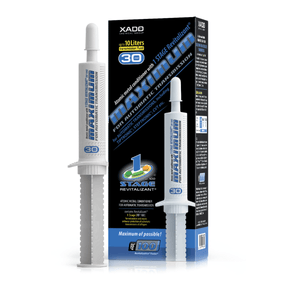
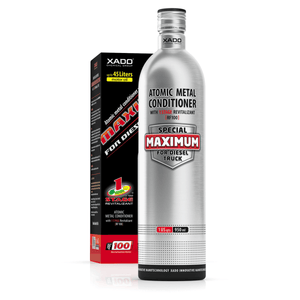
- 56. What should I choose for the treatment: the package with 3 tubes, 1 Stage revitalizant or Metal Conditioner Maximum with the revitalizant?
- 57. Doesn’t good synthetic oil already contains all necessary additives?
- 58. Do car manufacturers recommend the use of the additional additives?
- 59. What does the RF mark mean?
- 60. Is XADO compatible with other additives on the market?
- 61. Is XADO an Extreme Pressure Additive (EPA)?
- 62. Our company uses machine tools. How will we benefit from this treatment?
- 63. Can Xado be used on the Railways, in Aircraft, Energy and Marine Industry?
- 64. Can Xado be used with Fire Arms and Artillery equipment?
- 65. I have been told that I should not use an additive in my oil?
- 66. There are several other products on the market that seem similar to XADO. Are they the same?
- 67. Why is XADO not stocked by the major UK retail chains?
- 68. Do I have to order the product online or can I place an order by calling your office?
- 69. Despite all your information I still remain sceptical, as there have been so many claims for "wonder" products in the past?
- 70. Is the revitalizant toxic?
1. What is Revitalization and how does it occur?
The term “revitalization” (from Latin “vita” – life) literally translated means “returning to life”. The discovery of the revitalization phenomenon is based on unique physical and chemical processes, which, under specific conditions, can occur in the friction zone. In short, their essence consists of the following: during mechanical operation, excessive loads occur in the friction areas. At extremely heavy loads, excess destructive energy is released. But if we introduce a unique building material – a revitalizant – into the friction zone, then the energy released by the friction, will actually bind new material to the friction surface instead of destroying the material surface.
How does it usually occur?
Let us imagine a flaw in one of the friction surfaces. In this case, it is a scratch (in the cross-section) made along the axis of motion of the surfaces. Here, the metal atoms have non-compensated double bonds, i.e. such atoms, if force is applied, can be easily “captured”, energised to build up their oscillation, and detached from the matrix. Imagine a tree growing on the edge of a ravine. Due to the influences of water and wind, the soil gradually erodes the soil to expose the roots. The tree becomes unstable, and a strong gust of wind would be enough to uproot it. In simple terms, the same process occurs during surface wear. Atoms are easily dislodged and surface wear develops. Furthermore, under excessive loads, entire groups of atoms – clusters – can become dislodged, causing extreme wear.
This has always been the case until the phenomenon of REVITALIZATION was discovered, when scientists found that it was possible to reversing the process of wear by restoring the worn-out surface! It turned out that conditions could be created when the affected part is able to restore its surface thickness and size to its initial dimensions. To create such favourable conditions, it is necessary to introduce a specially synthesized substance – XADO revitalizant into the friction zone. It contains the building material for the new surface and a unique energy activator, which enables the excess friction energy to be harnessed in order to create a new matrix – in fact, a brand new surface.
You claim that the coatings obtained are unique. What are the key features?
The key features of the part’s surface before and after revitalization are as follows: increase in micro hardness (kg/micro metre2) from 65-280 to 650-750 range, after treatment; the roughness coefficient (Ra) before revitalization was 0.9-2.1, and after treatment it is 0.06; and above all a dramatic increase in corrosion-resistance characteristics.
2. How does the created CERMET surface grow?
Revitalization starts in the areas where the greatest friction (the zone of heaviest wear) occurs, since it is exactly this location where sufficient excess energy exists to initiate a new process, and where metal atoms have the greatest number of free (non-compensated) bonds. These bonds, like magnets, capture and hold the building material – the revitalizant - where it is needed. In the presence of the active load, the energy activator harnesses the excess energy to construct a new matrix. In simple terms, a new coating is formed on the old, worn surface. In several minutes after the onset of revitalization, a cermet patch will appear on the scratch. The highlighted zone, the zone of abnormal activity, has disappeared. The energy processes have stabilized, and surface growth stops. At the same time, mutual diffusion of two substances (metal and cermet) takes place to complete the process of building a new coating, cementing, and finally eliminating the flaw. The more the process continues, the stronger the new surface becomes.
How is surface growth controlled?
Let us examine a part under a microscope. Even the smoothest surface, at high magnification, looks uneven and represents a continuous series of peaks and valleys. In time, wear will erode a weak surface and will dislodge and “expel” metal atoms, turning them into chips and making the grooves deeper. 100 % wear occurs, not when the part completely disintegrates, but when the magnified peaks start to abrade. As long as these peaks exist, the part can be restored by revitalization. However, the part will never grow in size more than required. As soon as the valley and peak become equal, the energy conditions required for revitalising disappear, and the conditions stabilise. As soon as the surface starts to wear in another location, the revitalazant left over from the previous treatment will immediately start revitalization all over again.
3. What is the thickness of the metal-ceramic coating formed as a result of revitalization?
The actual layer created by XADO revitalizant is measured in microns (one-hundredths of micro meter in the engine and one-tenth of a micro meter in gearbox wheels and several hundredths of a millimetre in the engine cylinder and piston.
4. Is there a risk of the metal-ceramic layer growing in excess? Can it cause the engine to seize up?
No an XADO will not damage your engine. XADO revitalizants are completely soluble in the oil and do not change the viscosity or the properties of the oil in any way. Remember, XADO is self-regulating. As soon as the original worn surface has been repaired, the friction factor drops dramatically, and the XADO activation energy will also decrease. The process then stabilises, and at some point, the energy will drop to a point where cermet growth will stop completely. Besides, using too much is just a waste of money.
5. A superhard coating is formed as a result of the revitalizant’s application. Can the engine be rebored, if necessary?
This is a common question from car owners, and we would like to set their minds at ease. The metal-ceramic coating is formed to a depth of 10–30 microns, and the boring tool can remove tenths of a 1 mm. Also, do you really need a conventional major overhaul? The unique ability to restore the original geometry of engine parts will allow you to avoid these labour-intensive and expensive repairs. For instance, the repair of the sleeve assembly can be reduced to just replacing damaged piston rings or replacing rings that have completely lost elasticity, replacing a burnt-out piston, etc. In other words, you would only need a “face-lift” repair.
6. What if the metal-ceramic layer peels off in operation?
The metal-ceramic layer can't peel off in operation. A reciprocal diffusion of metal and metal carbides to the depth of 10–30 μm (micrometre) takes place. There is no distinct border between the initial surfaces and the metal ceramic, so there are no conditions for the metal-ceramic layer to “peel off”.
7. Has Xado been tested by a world recognised testing authority?
Yes, TÜV Thüringen, Germany, one of the world's leading inspection agencies, has tested XADO. TÜV approval and the certification procedures are, without question, one of the strictest and most comprehensive testing procedures in the world and involve rigorous testing and verification that the product satisfies the strictest European regulations for the industry in which the product was designed.
TÜV unequivocally confirms the effectiveness of Xado and that Xado reduces fuel consumption, increases compression and reduces exhaust emissions. Click here to see the TÜV test results
What equipment was used by TÜV to verify their results?
The TÜV specialists used industry standard equipment to measure compression, toxicity of exhausts, as well as a chassis dynamometer to measure engine power, etc. You can see additional examples of tests on customer vehicles on our testimonial page.
Why has XADO not been tested using ASTM Falex equipment?
The ASTM Falex test is the Standard Test Methods for Measurement of Extreme Pressure Properties of Fluid Lubricants (i.e using the Falex Pin and Vee Block Methods). As Xado is not a lubricant, it can’t be tested with this system.
What other tests have been carried out?
Apart from TÜV, customers and clients have carried out their tests. You can see some of these on our website, as well as forums across the internet.
8. I’ve heard that aftermarket additives are clogging up filters...
No. The revitalizant-gel easily dissolves in oil, leaving its viscosity and other physicochemical properties unchanged. It easily goes through the filter elements directly to the working friction surfaces.
9. I am going to apply revitalizant to my new car, but it is under the warranty…
We stick to the emphatic opinion that it is best to apply the revitalizant compound to the engine during the breaking-in period. The application of the revitalizant is especially efficient when engine parts are new. Due to the revitalizant effect, the breaking-in goes quicker, softer, more efficiently and almost without losses of metal into “boring”.
10. What is implied under the protection guarantee for 100,000 km (62,000 miles) of run?
It is implied that the surfaces will not wear out during the guarantee term, provided the car is operated in a regular mode. For example, should a scratch appear on the cylinder wall on the 99th (61st) thousand of the run, it would disappear due to the revitalizant’s high restoring properties. The scratch will “heal!”
11. There is nothing wrong with my Car, but would XADO still help?
XADO would certainly help; not least, it will protect your engine against any future problems. Even if you think there is no existing problem with your engine, there will always be minor areas or wear that XADO will restore. View XADO as an insurance policy.
12. I have a new Vehicle. Why do I need XADO?
During the first few miles when a new vehicle is being run-in, adjustment of friction surfaces takes place. Revitalization allows the vehicle to be run-in with minimal material wear and offers the unique chance of preserving the entire machinery. The surface does not wear out because it is protected with a cermet coating, which is more durable than a metal surface matrix. It will be the new cermet protective layer that will be subject to wear and tear, not the original metal surface. Note that during revitalization, the friction surfaces adjust to one another individually; this is only possible during manual assembly. This means you will receive a custom fitted engine in your vehicle!
13. If you are about to embark on a major engine overhaul, you’re just in time!
Revitalising is critical for engines that have been overhauled because, during a typical overhaul, you cannot repeat the steps of the original surface hardening. When boring an engine, the upper layer that is especially hardened is removed. And, if prior to the first boring, the engine was running for about 200,000 km on average, then after the major overhaul, this figure will fall to 70,000 km. This would ultimately happen if you do not use our XADO treatment. XADO will harden the surface for you!
If the engine is new or has just completed a major overhaul, will half a dose do?
According to application instructions, new engines and those that have completed a major overhaul can be treated in one step – 2 tubes at a time. So, can my vehicle be completely restored? Nothing in the world is infinite, and vehicles are no exception. The main point is to understand the revitalizant operating principle and to apply it correctly. You see, many people suffer for years listening to the heart-breaking grating noise coming from their gearbox, or reducer, and are simply unaware of the fact that these failures can be easily treated. The noise disappears in several hours after the introduction of revitalization. Of course, there are no miracles in this world: a broken shaft can never be repaired, but laying down a protective coating of 0.02 to 0.05 micrometre on the cylinder wall, or of 1 micrometre on gears, is easily achievable.
14. How often will the engine need to be treated?
The treatment again depends upon the amount of oil in the engine-and-gearbox unit (see question above). If you have used any of the engine treatments, which include the three stage blister packs, petrol or diesel the three stage EX120 range for petrol and diesel, the advanced 1 stage products or the 1 stage metal conditioners. This varies from 1 blister pack treatment up to 9 blister packs for larger engines. The treatment for an average petrol or diesel saloon car with an oil capacity of 3 to 10 litres is 3 blister packs. Don't worry, this is NOT required immediately, but these will last for 100,000 Kilometres (65,000 miles). We are one of the only products that will last so long, unlike other products that require you to repeat the process every 20,000 miles!
15. When is it best to start the application of the revitalizant?
Revitalizant is effective at any stage of car operation and is always useful. The most important thing is that the unit must be in an operational state. Ideally, the revitalizant should be applied from the breaking-in period on.
16. What happens to the honing and cylinder cross hatch?
Honing is designed to provide a relatively safe adjustment of parts and to hold oil on the cylinder walls.
The revitalizant modifies honing in the areas of the most intensive adjustment (cylinder-piston group near the top dead point) and preserves it unchanged in the unloaded zones.
It is widely agreed that the crosshatch finish on a cylinder wall is vital to help retain oil on the cylinder wall surface.
The application of XADO has no effect on the lubrication of the cylinder surface as the cermet coating is oleophilic (oh-lee-oh-fil-ik), meaning the coating attracts oil. The oleophilic nature of the cermet coating not only retains oil but also significantly reduces friction between the piston rings and the cylinder walls.
In fact, by using XADO, you will help to refine the bore Geometry.
17. Can I drive without oil if I use revitalizant?
No. Driving without oil is only a spectacular test that demonstrates the unique properties of the metal-ceramic coating. The revitalizant has not been designed for driving without oil; only for the increase of the operational life and reliability of car parts.
Oil is not just a lubricant. It also washes, cools, works as a hydraulic fluid by operation of hydraulic lifters, and provides other functions. Oil is necessary even for a car that has undergone the full revitalization cycle. However, under extreme conditions such as loss of oil or driving with a perforated housing, the revitalizant will provide reliable protection for your car.
18. How long does the revitalizant’s effect last?
Tests show that the protective coating remains even after 100,000 km (62,000 miles) of run. After 100,000 km (62,000 miles), it is advisable to repeat the revitalization cycle. To support the surface restoring potential at the highest level, it is strongly recommended to use oil with the atomic revitalizant XADO Atomic Oil or Atomic Metal Conditioners (AMC) with revitalizant after each oil change.
19. What kind of oil is the best for treatment: old or new, synthetic or mineral?
It makes no difference because the revitalizant is compatible with any type of oil. It does not chemically react with them and does not change their viscosity, physicochemical or operational properties. The oil only carries the revitalizant to the friction surfaces.
20. I am the second owner; I have no idea what kind of oil was used in the engine. Can I use XADO products?
Even if some additives have been applied to the engine earlier, they will not have much effect on the revitalizants’ action.
21. Won’t the additive settle in the bottom of the oil pan and lose its efficiency if the car is not used for a long period of time?
No, the revitalizant will not settle. After the revitalizant has been applied, the engine should be run at idle for at least five minutes. This is enough time for the revitalizant to dissolve in oil completely and to begin its work, and will not be affected, even if the vehicle has not been used for some time.
According to application instructions, after the revitalizant has been introduced, the engine has to be run at idle for at least five minutes. This is enough time for the revitalizant to locate the areas of friction and begin its work, and it will not be affected by periods of inactivity, such as parking.
22. When my car is idling, the oil pressure light blinks. Will XADO help?
There are many causes of reduced oil pressure, ranging from trivial failure of the oil sensor to a worn out oil pump, bushings, or crankshaft journals. If the wear is not catastrophic (not 100 %), XADO will definitely help! In any case, consult a certified technician.
23. Will the revitalizant help in case of increased oil consumption?
There are still more reasons for increased oil consumption, such as wear of parts in the cylinder or piston group, bedding, gumming up, or breakage of the piston rings, valve stem seal failure, or oil leaking through seals. If the reason is wear, the revitalizant will help.
The causes of excess oil consumption are numerous. Some of them are easy to eliminate, while others present a serious problem, such as gumming up or broken piston rings, valve stem seal failure, or leaking oil seals. If the problem is due to the worn sleeve assembly, XADO can help, but even here, the degree of wear is a key factor. Let us remind you of manufacturers’ recommendations: consumption of 1 litre of oil per 1,000 km (for a petrol engine) points to practically 100 % wear, so good mechanical diagnostics is always necessary.
24. How does Xado help to save fuel?
As a rule, excessive fuel consumption is caused by worn sleeve assemblies. After revitalization, the assembly geometry will be restored, and fuel consumption will be restored to its original value. In addition, a lower friction factor (surface finish 0.06 Ra instead of the usual 0.9 to 2.1 Ra) will significantly reduce friction loss. The result is a dramatic increase in fuel savings, up to 30 % at idle and 5 to 7 % when driving.
25. Will XADO stop my engine from smoking? Will the revitalizant help?
Yes, but it depends on the colour of the smoke coming from your exhaust.
White smoke is caused by water and or antifreeze entering the cylinder, and the engine trying to burn it with the fuel. In this case, you need a new cylinder head gasket, and XADO cannot repair this.
Black smoke is caused by excess fuel that has entered the cylinder area and cannot be burned completely due to a faulty carburettor, fuel pump, or leaky fuel injector. XADO will certainly help the faulty fuel pump, particularly if you have an HPFP, in which case you can use our XADO gel for HPFP.
Blue smoke is caused by engine oil entering the cylinder area and being burned along with the fuel air mixture. The car has many seals, gaskets, O-rings and piston rings that are designed to keep the engine oil from entering the cylinder. XADO cannot treat the gaskets and O-rings, but it can treat the piston rings.
26. I own an old car, and the engine sounds a little noisy. Can XADO be used in old classic Cars?
Try using XADO engine blister pack or the single 1 Stage Advanced engine treatment, which comes in a tube or as a metal conditioner. Yes, XADO can be used with any vehicle, no matter its age. We have many classic car owners who use XADO.
27. My vehicle has just failed its MOT due to high exhaust emissions. Will the revitalizant help?
The increase of harmful emissions and particulates could be due to the quality of the fuel used or due to a poorly set up fuel pump. The most frequent reason for harmful exhaust emissions is engine wear. In which case, the revitalizant will definitely help. The revitalizant reduces the emission by up to tenfold and sometimes up to a hundred times.
Try one of our engine revitalizants. We have had many customers use our products to pass an MOT. Of course, it depends on the state of your engine, but there is no harm in trying.
28. I'm interested in improving my engine compression. Will one tube of the 3 part treatment be sufficient to improve compression?
One blister pack, syringe or tube will certainly help, but it will not complete the process of full revitalization. There is no harm in trying, and you can always order additional blister packs as and when you want to.
29. How will I feel the effect of the revitalizant on my car?
The driver will feel an increase in engine power, acceleration, flexibility and a change in the sound of the engine operating in different modes. Drivers will notice improvements after a 50–100 km (31–62 miles) run from the product’s application.
These improvements are the result of the revitalizant’s restoring effect, as it increases and equalises compression in cylinders.
30. Will revitalization help any engine?
Yes, all kinds of engines can be improved with revitalization, as long as the engine is in working order. Whether the engine is petrol (gasoline), liquefied petroleum gas (LPG), diesel, biofuel, along with high-powered ones, with direct injection, multivalve, or equipped with turbo-charger, revitalization will help.
In order for the protective metal-ceramic coating to be formed, the engine must be in an operable state.
The check parameters, which can measure the engine’s operating capacity, are compression and fuel consumption. The decrease of compression for 20–25% – from the nominal parameters, its dispersion on cylinders by more than 1.5 units (atm) and/or the oil consumption more than 0.4–0.6% from the fuel consumption can indicate the critical condition of an engine.
Examples of the critical condition of an engine:
1. The rated value of the compression in the engine is 14 units (atm). The value of the compression in one of the cylinders is 10,5 and less units (atm) or the compression is 11 and 13 units (atm).
2. The fuel consumption in the engine is 10 l for 100 km (1 gal for 25 miles), with oil consumption of 800 ml for 1000 km (1 US qts for 750 miles) and more.
Critical condition of an engine is indicated by 100% wear of its parts (parts are damaged)
The revitalizant shows its restorative effect even when the engine is in critical condition. However, in this case, the full restoration of the engine’s operational parameters to original values may not occur.
31. When is it recommended to use the revitalizant for cylinders? Is there a revitalizant to treat the whole engine?
Gel revitalizant for cylinders is designed to treat working surfaces and is applied directly onto the cylinder walls to remove shape defects such as ellipse form and markings and scratches up to 0.1 mm.
Service stations have found revitalizing useful even for complete engine overhauls. Before the final engine assembly, the cylinder-piston group and crankshaft bearings of the gas distribution mechanism are lubricated with a mixture of gel revitalizant for cylinders and oil in equal parts. This guarantees their effective bedding-in, eliminates the inaccuracy of the reconditioning, and considerably increases the engine’s service life.
32. Why does the compression in the cylinders increase?
By restoring the cylinders’ geometry, compression grows by 10 to 20 % as early as the first 500 to 1,000 km of operation. We have witnessed cases when the compression increased from 4 - 6 atmospheres to 10 - 12 atmospheres. Usually, low compression values are caused by mechanical damage (piston burnout, valves, etc.), rather than by natural wear.
33. Should the treatment of the diesel engine and fuel outfits be done separately or simultaneously?
It is better to do it simultaneously. The simultaneous treatment not only improves the engine operation by increasing its power, but it also improves the performance of the fuel outlets. The fuel pressure increases and the fuel injection improves, which results in greater fuel economy.
34. Will Xado affect the Turbo or Catalytic converter?
No, the revitalizant protects the turbo. The turbo is designed in such a way that its bearings are lubricated with a relatively thick coating of oil. The main wear of a bearing occurs at start and stop, when this coating is disturbed, and it is precisely at this moment that the revitalizant will start to work, forming a protective coating on the bearings. Xado revitalizant will not affect the catalytic converter. It will not harm them in any way.
35. I have the “Common Rail” injection system, diesel engine CRDi. Has revitalizant been tested for use in these engines?
Yes, it has been tested and regularly undergoes testing for new constructive innovations. Modern systems of diesel engine fuel lines with high-pressure generation, such as “Common Rail” and “Pumpe-Düse” (pump-injector) types, have plunger pumps where the plunger and sleeve wear the most. There are no technical restrictions in applying revitalizants to these fuel supply systems. The coating formed on the plunger’s surface provides protection for the complex mechanism from low-quality fuel, which can contain mechanical fouling or water, and from fuel with bad lubricating properties. This includes nonsulfurous fuel, or “dry solar oil”, biofuel with a high ethanol concentration.
36. Will XADO work on a Nikisil coated engine?
Yes, XADO will work on a Nikisil coated engine, and no, it will not strip the bore lining of its original Nikisil coating. We have experience with this coating as well as other similar coatings, and XADO works well.
37. Can I use XADO in an engine with a dry sump?
Yes, XADO can be used in any engine, whether it has a dry or wet sump.
38. Will XADO quieten engine tappets?
Noisy tappets can be due to inaccurate tappet adjustment, so this may need to be adjusted manually. If there is some wear and tear on the metal surface, then XADO will help. Again, try it and see if it helps; it will do no harm.
Can valve guide rods be reconditioned?
Valves are protected with special oil-scraper cups (valve seals), so the amount of oil getting onto the valves and, respectively, of revitalizant, is small. If the valve wear is insignificant, the small amount of revitalizant is sufficient to protect and preserve the valves. If the wear is heavy, it will be necessary to replace the valves and the guide sleeves.
39. When treating ICEs, should the cylinders also be treated?
No, that’s not required. It’s quite a different matter if you want to restore the compression in one, two, three, or more cylinders without treating the entire engine, or to eliminate ring sticking (this is a frequently occurring problem because any overheating of the engine contributes to ring sticking). In this case, the gel revitalizant for reconditioning cylinders is exactly what you need!
40. I use Hydrogen as a fuel, and I am concerned about hydrogen embrittlement. Will XADO help to protect the engine?
Indeed, XADO can prevent hydrogen embrittlement. As XADO creates a CERMET (ceramic/metal) layer on any friction surface it encounters, which creates a barrier against the absorption of hydrogen by the underlying metal structure, thereby preventing embrittlement.
41. Can XADO be used in engines with wet clutches, Audi tiptronic gearboxes and rotary engines?
Yes, XADO will work in all engines. If the engine is in reasonable condition, but in need of some revitalization the product will work. If the engine is excessively worn, it will still work, but the results will be less noticeable, and it would be best accompanied by any necessary mechanical repairs.
42. My Vehicle is very noisy in 5th gear. I changed the oil, but that didn’t help. Will XADO help?
A gearbox that is noisy in its highest gear is not uncommon, even in some new vehicles, in which, due to design features, the fifth gear runs in an almost dry state. Earlier, attempts were made to solve this problem by making adjustments. However, no adjustments are capable of coping with the wear that has already occurred and preventing future wear. The addition of the XADO gel revitalizant allows you to eliminate for good the noise that occurs in five-speed CSGs, as well as to improve positive gear change. The repair will appear within 25 to 30 miles after treatment.
43. I have noticed a whine or droning in the gearbox or differential. Will the revitalizant help?
There are two main reasons for the increased noise from transmission mechanisms. Droning can occur gradually, as it is connected with the wear of gear teeth, bearings and shafts. The revitalizant always helps in such instances. However, sometimes the box drones from the beginning of its operation as a result of production deficiency, causing problems in the gear teeth changeover or causing the teeth to come together too tightly. The revitalizant will work in this case, too, but if the deficiencies are substantial, the noise may not disappear.
44. How can gear shifting precision be improved?
The Gear shifting provision can be improved with a new coating formation. The distinguishing feature of the revitalizant is to form a protective coating not only on the ferrous materials, but on the nonferrous metals as well. This is especially evident on the synchronizers, which are manufactured from bronze alloys or nonferrous metals and are responsible for gear shifting.
45. What gel should be used when modern robotised gearboxes stand between the mechanical and automatic gearboxes?
Robotised gearboxes and gearboxes with dual clutch, or dual clutch transmission, are improved automatic gearboxes. For the revitalization, it is recommended to use the gel for the gearboxes and reducers.
46. What should be applied to the mechanical gearbox with the liquid for the automatic gearboxes?
In modern mechanical gearboxes, where liquid for automatic gearboxes (ATF) is used, it is recommended to use the gel for the gearboxes and reducers.
47. Will the revitalizant harm the performance of friction clutches in self-locking differentials?
No, it won’t. The revitalizant can be used without any hesitation in axles with self-locking differentials. The assembly is designed in such a way that the torque transfer of the friction clutches occurs through the oil and depends on its viscosity. The revitalizant has no effect on the viscosity properties of oil.
48. The automatic gearboxes (CVT) with the V-belt variable speed drive unit differ in their capriciousness. Will the revitalizant help?
Yes, it will. The weak point of the variable speed drive units is the contact of the wedge-like surface of the belt with the pulley, and it is this contact that is effectively protected by the revitalizant. The revitalizant also protects other metal parts such as gears, bearings and couplings.
49. I have a Scooter or Motorcycle (below 1000cc) with a separate oil system. Where should I squeeze the gel – in the oil or in fuel?
A special EX120 Revitalizant gel is available for scooters and motorcycles. During the treatment of the four-cycle internal combustion engine, the revitalizant is applied directly to the oiling system of the engine.
Scooters with two-stroke engines can have separate and mixed oil systems.
During the treatment of the two-stroke engine that has a separate oil system, the revitalizant is added to the oil tank of the scooter. In scooters with a mixed oil/fuel system, the revitalizant, is applied directly to the fuel tank after first being dissolved in a small amount of the oil.
Xado can also be used with a chainsaw, outboard engine, in fact, any two-stoke engine.
50. Do I need to flush my engine before using XADO?
No, you do not need to flush your engine as part of the revitization process XADO cleans the metallic surfaces. However, if you do feel your engine needs flushing, try our XADO RED FLUSH - Engine Oil System Cleaner & Decarbonizer, Vitaflush product or our Atomex Total Flush all of which will not only flush the engine but will also restore it.
51. I bought some gel revitalizant blister packs, but I find I cannot squeeze the gel into the oil filler neck. What should I do?
Mix the contents of the tube with a small amount of oil warmed up to room temperature. You can then pour this down the oil filler neck.
52. I am just about to change the oil in my vehicle. Should I use XADO before or after the treatment?
You can use XADO in either case, but for the full treatment to take place, you must not change the oil until 1,500 km after using the treatment. For some of our treatments, this may be less, depending on the product you are using.
53. We are a car sales showroom. Would we have an advantage if we used XADO in all our vehicles before we sold them?
Yes, XADO will help protect the vehicle engines and keep your customers happy. We have many new car sales rooms and second hand car dealers who use our products. Look upon XADO as an insurance premium; it will protect your engine against any unforeseen issues that you may not be aware of. It is better to be safe than sorry!
54. The bearing is droning. What kind of revitalizant and how should it be applied?
Along with the gel revitalizants, XADO manufactures lubricant greases. In order to choose the correct grease, it is necessary to determine the wear rate of the unit.
The application rules are the same as for any other lubricant. First, remove the old standard grease, and then apply the new grease. Do not completely fill the inner bearing body with grease - this is a common error. Excess grease in a bearing, in fact, provides an additional load which causes overheating and will accelerate wear. Refer to the manufacturer’s suggested amount of grease that can be applied. XADO grease can be used for the entire service period of the bearing (or other assembly), and requires no subsequent replacement.
The Protective grease is applied to the new units and units with insignificant wear, or wear up to 10%, and it is a multipurpose substitute for any lubricant grease.
The Restoring grease contains more active components. That is why it not only protects the surface of the part, but also restores its original shape. It is applied to units and mechanisms that have up to 50% wear.
The Repairing grease is applied to the units with wear of up to 80%.
You can also choose the suitable packaging – tube, cartridge or container, and the amount of grease needed.
55. What is the difference between the 1 Stage revitalizant and the usual engine gel?
Today, the 1 Stage Revitalizant and 1 Stage Magnum Revitalizant for large diesel engines and trucks are one of the most powerful products in the revitalizant line. The advantages and differences from the usual engine gel are the operating speed, high-speed surface modification, the universality of the application and the one-phase treatment..
Operating speed. The new, perfect formula of the compound makes it possible to fully restore and perfectly protect the engine after a 100 km (62 miles) run, and guarantees its absolute protection from wear for 100,000 km (62,000 miles).
Universality. The compound is ideally suited for gasoline and diesel engines of any construction and uprating grade. The product is universal in respect to any state of the engine’s wear. It is also suitable for cars with high mileage as well as new cars.
One phase treatment. The revitalization is carried out in one phase. It saves time and makes the treatment procedure much easier.
1 Stage is the perfect choice for the consumer who appreciates a quick and reliable result.
56. What should I choose for the treatment: the package with 3 tubes, 1 Stage revitalizant or Metal Conditioner Maximum with the revitalizant?
Every product has its advantages.
The traditional Gel blister packs for Petrol engines and the Gel blister packs for diesel engines and EX120 products (=20% more effective) are part of a three stage treatment. They are well priced and are applied every 65 miles, and after the third tube is used, your treatment is complete. Some customers did not want the trouble of a three stage application, so we designed the new advanced 1 Stage treatment. As the name implies, you only have to apply this once, and your treatment is complete. (The amount of XADO required depends on your engine or gearbox oil capacity. Please refer to the appropriate product dosage.)
The new advanced 1 Stage revitalizant can be used with all types of engines, petrol, diesel, and LPG, whereas the traditional gel products are specific to the particular type of engine. (i.e. petrol gel revitalizant for petrol engines only).
The metal conditioners contain exactly the same revitalizants that are in all our products, except they have two additional enhancements. The first is what we call a 2D sliding agent, which provides additional anti friction properties. The second helps to enhance the lubricating properties of your oil by strengthening the oil's lubricating capacity.
57. Doesn’t good synthetic oil already contain all necessary additives?
Manufacturers tend to minimise their costs and make the product cheaper, and motor oil is no different. Additive packages are enough to correspond to the minimal obligatory requirements, but not a grain more.
58. Do car manufacturers recommend the use of the additional additives?
The modern car is the epitome of engineering and technological advances. However, the constant change of the model line-up limits the life span of the engine as parts are only manufactured for a certain amount of time. Our day-to-day realities, such as fuel quality and road surfaces, are not taken into account when the car is designed. The Revitalizant helps to increase the service life of a car and increases the safety and reliability of the parts.
59. What does the RF mark mean?
The Revitalization Factor (RF) is an efficiency index of restoration and protection of the engine against wear./p
The product with the RF 100 mark possesses the maximum restoring and repairing properties. As a result of its application, the surface is fully protected from wear for a run of at least 100,000 km (62,000 miles).
The product with an RF lower than 100 is designed for partial revitalization, protection from the current wear and maintenance of the protective qualities of the surface, which has undergone the revitalization cycle on a high level.
60. Is XADO compatible with other additives on the market?
Of course, you can. The XADO technology is compatible with all additives, metal conditioners, and re-metalisants, no matter how often they are used.
61. Is XADO an Extreme Pressure Additive (EPA)?
No XADO is not an EPA, as EPAs traditionally contain sulfur or chlorine compounds, which can react with water and combustion by products, forming acids that facilitate corrosion of the engine parts and bearings. As you have seen from our website, XADO causes none of these.
62. Our company uses machine tools. How will we benefit from this treatment?
A machine tool is a complex piece of equipment, but it is still a mechanism, so naturally, revitalization improves its performance. We would like to draw your attention to the extreme effectiveness of XADO for high-precision machine tools. The spindle is the key component of any machine tool. It is a highly loaded assembly running at high speeds (up to 30,000 rpm, and in coordinate grinding machines, the speed even reaches 84,000 rpm. This leads to significant wear in a very short time period. Experts know that conventional repair of such assemblies is, in many cases, impossible because of the specificity, complexity and shortage of parts. Here is where XADO comes in handy! Revitalization with one of the special high-speed XADO greases allows the spindle operations to achieve the required certification. Rejects are practically eliminated, which is of critical importance during any finishing operations.
63. Can Xado be used on the Railways, in Aircraft, the Energy and Marine Industry?
We are a railway company. Will XADO help revitalize our locomotives?
Yes, XADO can be used to reitalize the engine in standard diesel locomotive engines, but if the locomotive is a new generation of electric engines, you can still use XADO greases to lubricate the wheels and couplings, etc.
Can I use XADO in my aircraft engine?
Yes, whether it be added to the engine oil or a grease to lubricate any rotary couplings.
Can I use XADO in large marine engines as well as outboard engines?
Again, XADO can be used in any oil lubricated engine. The application process is the same as any vehicle engine, but in larger marine diesel engines, the quantity of XADO required will, of course, be greater and will be calculated on the quantity of oil lubricating the engine. Of course, you can also use XADO in your marine gearbox. If you need advice as to the amount required, please call us so we can help.
It is assumed XADO can be used in outboard engines
Yes, you can use it in all types of outboard engines, including the new electronic engines.
64. Can Xado be used with Firearms and Artillery equipment?
You claim that XADO will treat any firearm barrels, large or small?
Yes, XADO technology will recondition any mechanisms, simple, complex, small and big, ranging from watches to nuclear power plant turbines – wherever there is motion and friction. For a clear, effective and fast demonstration of the effectiveness of the technology, there is no better example than a “projectile & barrel”. Here is an ideal example where all the conditions required for the formation of the CERMET coating are in place, namely, a very high temperature, significant friction energy and interaction of materials with different strengths. The revitalization process takes place literally in front of your eyes. The Russian certified handgun test laboratory “Rzhevka” military unit 33491, in association with “Kalashnikov. Firearms. Ammunition and Equipment Magazine” carried out extensive tests. The tests included both new and used firearms with chromed and non-chromed barrels.
What does XADO Snipex barrel treatment provide?
Revitalising a rifle barrel with Snipex provides the following: geometry restoration (complete shuttering) and protection from the wear of the bore surface; maximum impact force for the given type of ammunition; a 10-fold increase in wear resistance and barrel life; an increase in firing flatness, the key factor is a 2 to 3 fold increase in firing accuracy!
Is any preliminary preparation of the barrel needed prior to revitalization?
No special preparation is needed. Standard cleaning of the bore is enough.
What is the point at which XADO will stop revitilizing a worn barrel?
The XADO revitalizant improves the firing performance of any firearm, however worn.
What is the service life of a reconditioned barrel?
A special experiment was needed to answer this question. First, a new chrome barrel was revitalized. Even though the barrel spread characteristics complied with the standard, the firing accuracy increased by 23 % after treatment with XADO!
Next, the durability tests were conducted. This meant firing 200 tracer rounds in succession. The firearm became so sizzling hot that the stock varnish coating began to run. It was cooled in the simplest way by dipping it into a bucket of water. Everybody waited impatiently for the results of the test. Sceptics wagered that the coating wouldn’t withstand the extreme temperature drops and would simply peel off. The results surprised even the developers of XADO! The firing accuracy increased by an additional 46.6 %! The service life tests carried out at the Rzhevsk test facility allow us to claim that the service life is 10,000 shots with no loss of improved performance. Under normal loads, you’ll be able to keep the barrel in an ideal condition at all times by treating it once a year with the appropriate XADO treatment.
Does the treated barrel need any maintenance?
No special maintenance is required. Moreover, the protected inner surface of the barrel is less subject to corrosion attack than conventional coatings are. Remember that chippings and micro cracks are restored even on chromed barrel coatings!
In one case, the firearm with a reconditioned barrel was kept in a room with high humidity for several months. Will the revitalizing effect disappear?
No, it won’t. Special barrel rusting and exposure tests have shown that the performance of a treated barrel does not degrade.
Does it make any difference whether the barrel is chromed or not?
The revitalizant improves the accuracy of any barrel, both chromed and unchromed.
I am a marksman and own a top of the range rifle. How will I benefit from revitalizing the barrel?
After revitalization, shooting accuracy, even for high-precision barrels, will certainly increase.
I have a shotgun with a pitted chrome barrel. Will XADO help?
Yes, it will. The main point is to observe the revitalization principle, i.e. to ensure sufficient friction by contact between the bullet and barrel surface. You might want to use a bullet of a special design. In which case, you can draw more extensive conclusions and back up both of our tests.
65. I have been told that I should not use an additive in my oil.
All engine oils and greases have some form of additives added by the manufacturer. In fact without these additives, the oils and greases would not do their jobs properly, so it is a fallacy that there are no additives in any of the oils and greases and that you should not use additives to further enhance your engine's performance, purely on the basis that the oil companies do not use them – they do.
You must remember XADO is different as it is NOT an additive. The oil or grease is used as a carrier to deliver XADO to where it is needed.
66. There are several other products on the market that seem similar to XADO. Are they the same?
No, they are not the same, and some of them can damage your engine. XADO is the original, and all others are attempting to copy our process.
67. Why is XADO not stocked by the major UK retail chains? Where can I buy your engine oils?
The reason why we are not on the high street is purely the fact that the major retailers do not always do justice to a popular product. We feel as though we can do better. We, in fact, regularly achieve the top position in most search engines, so much of our sales are based online, and we ship direct to individuals, dealers, motor factors and garages. Many of our customers order from us by way of a recommendation.
We are currently only offering engine oil purchased in small quantities. Our specialist field is in revitalization rather than lubricants, as oil is a flammable liquid distribution in small quantities is a problem. If you are looking to gain the benefits of revitlization for your vehicles, you are better off using one of our gel blister packs or 1 Stage revitalizants and adding this you your existing oil. If you are also looking to change your oil, then use an oil available from any motor parts supplier and add our revitalazant to treat your vehicle.
68. Do I have to order the product online, or can I place an order by calling your office?
We are happy to deal with your order in any way you wish. If you are happier calling our office within office hours, our sales staff will gladly process your order over the phone.
69. Despite all your information, I still remain sceptical, as there have been so many claims for "wonder" products in the past.
We can quite understand your scepticism, and we do not claim that XADO is a one stop fix all product. XADO has been independently tested and used by many customers in many countries around the world. All we can suggest is to try one of our products and see if it helps.
70. Is the revitalizant toxic?
No, it is not. All products have a sanitary allowance for application in the food industry and are hygienically certified.